
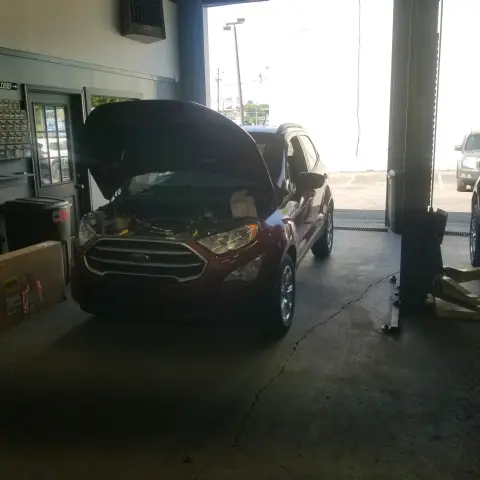
An engine produces a tremendous amount of heat, and the cooling system is all that stands between normal operation and a warped cylinder head. Our family-owned shop provides cooling system and radiator repair in Hermitage, TN for drivers who come to us from Nashville and nearby communities.
We work on cooling systems in domestic, Asian, European and hybrid vehicles. Whether your temperature gauge is climbing, you keep topping off the reservoir, or you just see green, orange or pink fluid under the car, we track down the cause and talk you through the repair.
Signs your cooling system needs repair
- Temperature gauge running high. Any reading above normal, or a temperature warning light, should be taken seriously.
- Steam from under the hood. Pull over safely and let the engine cool before checking anything.
- Coolant puddles or drips. Brightly colored fluid with a sweet smell is a common sign of a leak.
- Low coolant reservoir. The system is sealed, so a level that keeps dropping means coolant is escaping somewhere.
- Crusty residue on hoses or the radiator. Dried coolant around connections points to a slow seep.
- Poor heater output. Low coolant or a stuck thermostat can affect heat inside the cabin.
What our cooling system service can include
- Coolant level check and coolant condition test
- Coolant system inspection and pressure test for leaks
- Radiator rust and damage inspection
- Radiator flush and refill with the correct coolant type
- Radiator replacement
- Radiator and heater hose replacement
- Thermostat, water pump and radiator cap replacement
- Belt operation and wear check, and belt replacement
- Cooling fan and fan control diagnosis
How we handle cooling system repairs
- Request an appointment. Book online or call 615-600-5994. If the car is actively overheating, do not keep driving it; give us a call to talk through options.
- Pressure test and explanation. We inspect the system and pressure test it to find leaks, then walk you through what we found and provide an estimate before beginning repairs.
- Repair and bleed. After you approve, we replace the failed parts, refill with the specified coolant and bleed air from the system.
- Pick-up. We bring the engine to operating temperature, confirm it holds steady, and review the work with you. Affirm payments are available, subject to approval by Affirm.
How the cooling system protects your engine
A water pump circulates coolant through passages in the engine block and cylinder head, where it absorbs heat. The thermostat stays closed while the engine warms up, then opens to send hot coolant through the radiator, where air flowing through the fins carries the heat away. Electric or belt-driven fans pull air through when the car is moving slowly or sitting still, which is why overheating often shows up in traffic first.
The system runs under pressure, which raises the boiling point of the coolant. That is why a weak radiator cap can cause overheating and why opening a hot cap is dangerous. Over time, coolant loses its corrosion inhibitors, and plastic radiator tanks, rubber hoses and water pump seals age. Middle Tennessee summer heat and stop-and-go traffic add stress to all of it.
Many hybrids have a second, separate cooling loop for the inverter and power electronics, with its own pump and reservoir, and it needs attention too. Use only the coolant type your owner’s manual specifies, since mixing incompatible coolants can reduce protection, and follow the listed replacement interval.
Related services
- Transmission Service & RepairSlipping, harsh shifts or a fluid leak? We inspect automatic, manual and CVT transmissions, explain the findings and recommend the right repair.
- Tire Services & Wheel AlignmentFlat repair, rotation, balancing, tire replacement and wheel alignment done in our shop to help your tires wear evenly and your car track straight.
- Suspension, Steering, Shocks & StrutsBouncy ride, clunks over bumps or heavy steering? We inspect and repair shocks, struts, power steering and front-end parts and explain the fix first.
- Battery & Electrical ServiceSlow starts, dim lights or a battery that keeps dying? We test the battery, charging system and starter, find the cause and explain the repair first.
Frequently asked questions
What should I do if my engine starts overheating?
Turn off the A/C and turn the heater on full to pull some heat away from the engine, then pull over as soon as it is safe and shut the engine off. Do not open the radiator cap or coolant reservoir while the engine is hot, as the pressurized coolant can cause serious burns. Have the vehicle inspected before driving it further.
How often should engine coolant be replaced?
Coolant intervals vary a lot by manufacturer and coolant type. Many modern long-life coolants last for years, while older formulations need more frequent service. Your owner's manual lists the interval, and we can test coolant condition during an inspection.
Can I add plain water instead of coolant?
In an emergency, water can get you somewhere safe, but it should not stay in the system. Coolant raises the boiling point, protects against freezing and contains corrosion inhibitors. Mixing in water dilutes all of that, so have the mixture corrected soon afterward.
Why is my coolant level dropping with no puddle under the car?
Coolant can leak onto hot engine parts and evaporate before it reaches the ground, seep from a water pump weep hole, or escape from a loose cap. Internal leaks, such as a head gasket problem, can also consume coolant. A pressure test helps locate the source.
Do you offer radiator flush service?
Yes. A radiator flush removes old coolant and loose deposits and refills the system with the coolant type your vehicle specifies. We usually pair it with an inspection of the radiator, hoses and cap so we are not putting fresh coolant into a system that is about to leak.