
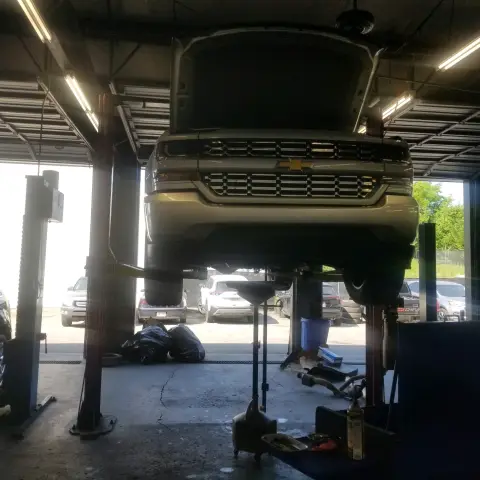
The transmission is one of the most complex and expensive assemblies in your vehicle, and small problems tend to grow if they are ignored. Music City Auto Repair offers transmission service and repair in Hermitage, TN for drivers who come to us from Nashville and nearby communities.
We work on automatic, manual and continuously variable transmissions (CVTs) in domestic, Asian, European and hybrid vehicles. Many transmission complaints turn out to be fluid, sensor or software related, so we start by finding out what is actually going on before talking about major repairs.
Signs your transmission needs service
- Slipping. The engine revs climb but the vehicle does not pick up speed to match.
- Harsh, late or delayed shifts. A clunk into gear, or a pause before the car moves after shifting into drive or reverse.
- Red or brown fluid under the car. Transmission fluid leaks often show up near the middle of the vehicle.
- Burning smell. Overheated fluid has a distinct burnt odor and loses its ability to protect.
- Whining, humming or grinding. Noises that change with speed or gear can indicate internal wear.
- Clutch trouble on a manual. A high engagement point, slipping under load, or difficulty getting into gear.
- Warning light or limp mode. Many vehicles lock into a single gear to protect the transmission when a fault is detected.
What our transmission service can include
- Automatic transmission fluid check and condition assessment
- Automatic transmission fluid service, drain-and-fill or full fluid exchange
- Automatic transmission inspection and scheduled maintenance
- Diagnostic scan for transmission codes and sensor data
- Leak inspection and seal, gasket and cooler line repair
- Manual transmission inspection
- Clutch inspection and adjustments
- Automatic and manual transmission rebuilds when inspection shows internal damage
What to expect with transmission work
- Request an appointment. Schedule online or call 615-600-5994. Describe when the problem happens: cold or warm, at certain speeds, or in specific gears.
- Road test, scan and inspection. We drive the vehicle, check codes and fluid, and look for leaks. Then we explain what we found and give an estimate before any repair begins, including whether a fluid service, an external repair or a rebuild makes sense.
- Repair. Once you approve the plan, we complete the work and follow the manufacturer’s fill and relearn procedures.
- Pick-up. We road test again and review the work with you. For larger repairs, Affirm financing may help spread out the cost, subject to approval by Affirm.
Fluid is the lifeblood of a transmission
Automatic transmissions use fluid for far more than lubrication. It transmits power through the torque converter, applies the internal clutches through hydraulic pressure, and carries heat out to the cooler. As it ages and gets hot, it loses friction properties and protective additives, which leads to rough shifts and accelerated wear.
Heat is the biggest enemy. Hauling heavy loads, pulling a trailer, mountain driving and crawling through rush-hour traffic all push fluid temperatures up. If your vehicle sees that kind of use, look for the severe service schedule in your owner’s manual; it often calls for more frequent fluid changes.
Using the correct fluid matters too. Many manufacturers require a specific formulation, and CVTs in particular use dedicated fluid that is not interchangeable with conventional automatic transmission fluid. The wrong fluid can cause shudder, slipping or damage. Finally, do not ignore small leaks: a transmission that runs low on fluid can overheat and fail far sooner than one that is kept full.
Related services
- Brake RepairSquealing, grinding or a soft pedal? We inspect pads, rotors, calipers and fluid and explain what your brakes need before any work begins.
- Check Engine Light & Engine DiagnosticsCheck engine light on or flashing? We go beyond reading a code to test the system, find the actual cause and explain the fix before work begins.
- Oil ChangesLube, oil and filter service with the oil your engine is designed for, plus a quick check of fluids, belts and tires while your car is in the bay.
- A/C & Heating RepairWarm air from the A/C or no heat in winter? We inspect, find leaks and repair car air conditioning and heating systems, then explain the fix first.
Frequently asked questions
How often should transmission fluid be changed?
It varies widely by vehicle. Some manufacturers list a specific service interval, others describe the fluid as long-life under normal use but recommend changes under severe conditions such as hauling or heavy traffic. Your owner's manual is the authority, and we can check the fluid condition during an inspection.
Is a transmission fluid flush bad for an older car?
Fresh fluid is generally good for a transmission. If fluid has never been serviced and is badly burnt, a sudden full exchange can occasionally reveal problems that were already developing. We look at the fluid and the vehicle's history first and recommend a drain-and-fill or a full exchange accordingly.
What does it mean if my transmission is slipping?
Slipping is when the engine revs rise but the vehicle does not accelerate as it should, or it seems to lose a gear briefly. Causes range from low or worn-out fluid to failing clutches, solenoids or a torque converter problem. Have it checked early, as driving on a slipping transmission can increase damage.
Do you work on manual transmissions and clutches?
Yes. Our transmission work includes manual transmission inspection, clutch inspection and adjustment, and manual transmission rebuilds when an inspection shows internal wear.
What color should transmission fluid be?
Most automatic transmission fluid starts out red or pink and darkens with age. Dark brown fluid or a burnt smell suggests it is overdue or the transmission is running hot. Some vehicles have no dipstick, so the level must be checked on a lift following the manufacturer's procedure.